Cold or hot:
why does 30°C matter?
Why the same fish can turn out so differently, and what happens as smoke temperature rises beyond this reference point.
Explore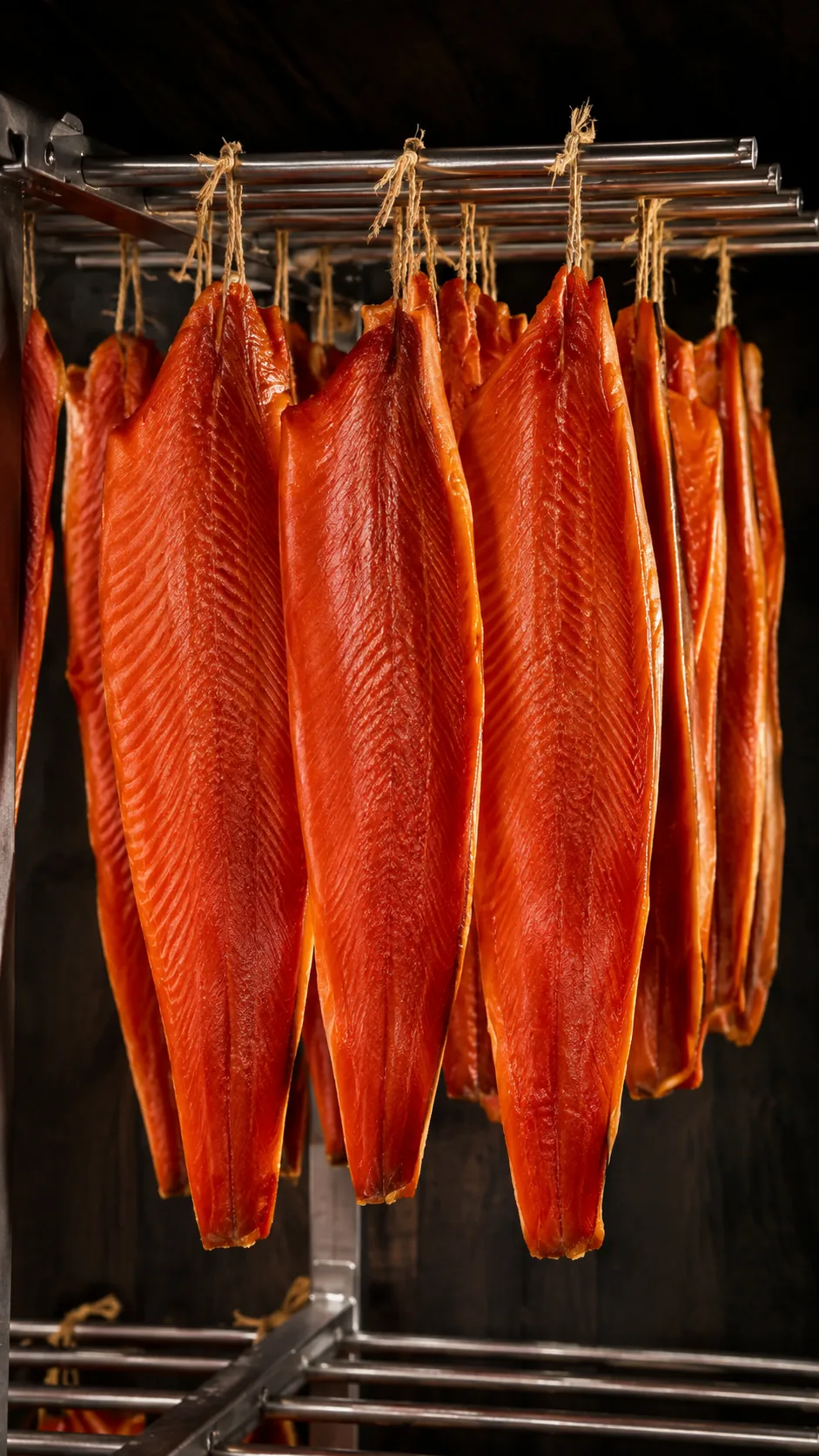
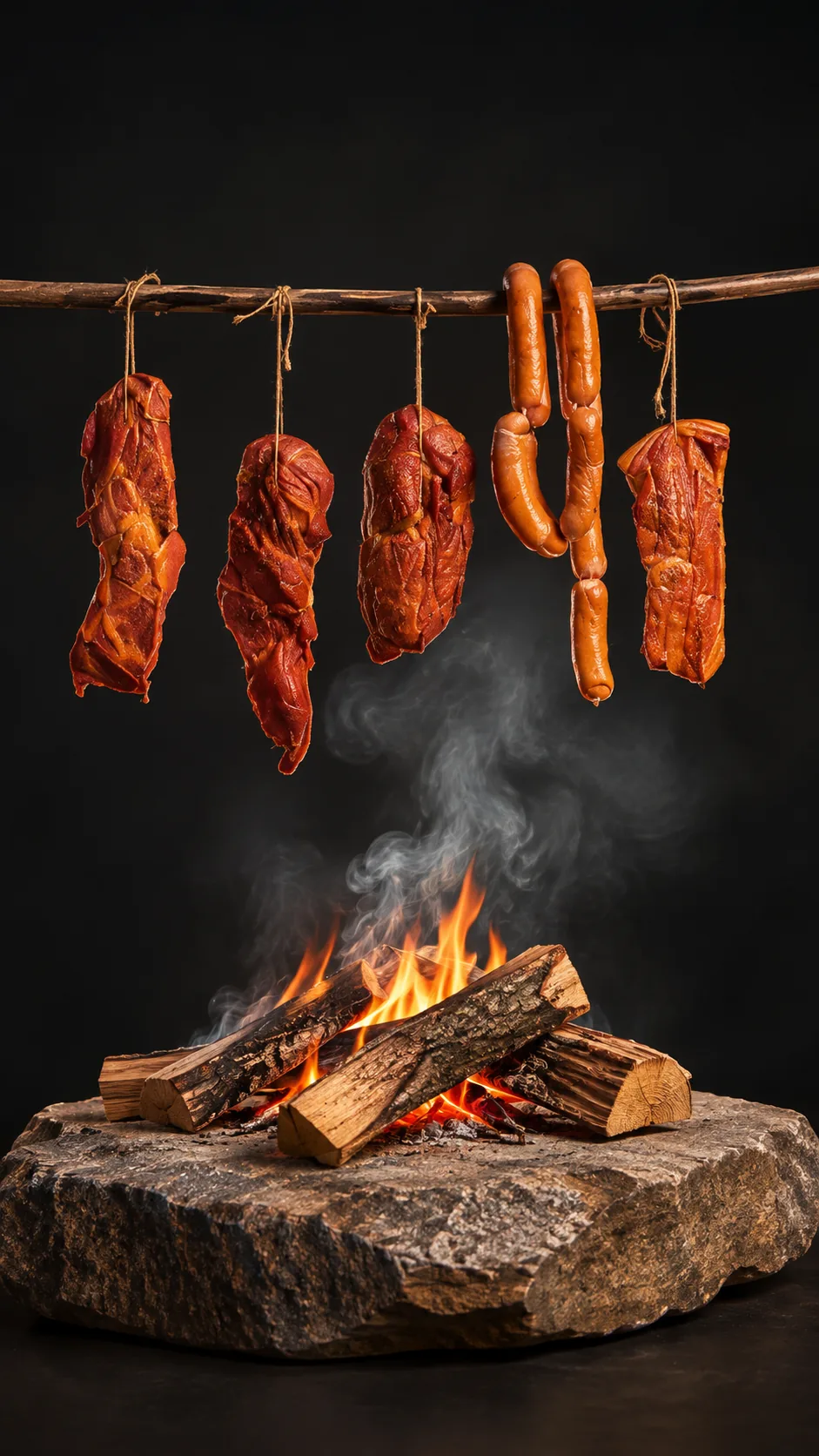
Temperature
changes everything.
The same fish has a different texture, taste and aroma after cold or hot smoking.
Cold smoking
The food retains a texture closer to raw or cured food: firm, translucent and suitable for thin slices. The process takes hours or even days.
Hot smoking
Proteins denature: the fish becomes lighter, opaque and flaky. It is cooked with heat. The process takes tens of minutes or hours.
Watch
how it works.
The main stages of cold smoking, a comparison of cold- and hot-smoked fish, traditional methods, and why smoke temperature and quality matter.
Video in English · Pirita Outdoor
Move
the slider.
See how a piece of salmon changes as chamber temperature rises. There is no sharp boundary: proteins change gradually, but 30 °C remains a useful technical reference.
At lower temperatures the food can dry and take on smoke without pronounced cooking. Temperature alone does not make the process safe.
Chamber temperature is a process reference, not the temperature inside the food or a guarantee of safety.
Cold smoking
begins before the smoke.
Proper preparation is as important as the smoker’s design.
- 01
Curing
Salt affects moisture, flavour, proteins and microbial survival. Time depends on thickness, concentration and temperature.
- 02
Drying
A thin, tacky film called the pellicle forms on the surface and helps smoke settle evenly.
- 03
Smoking
Maintain a stable temperature and smoke flow; the process can take hours or several days.
- 04
Resting
Resting under refrigeration evens out flavour and aroma. Use the conditions specified by a validated process.
Types of wood
and flavour.
Wood chips help shape the flavour and aroma of the finished food. Select a wood or a food.
Alder
Neutral and versatile
- For beginners alder is a versatile choice for many foods.
- Combine woods, such as alder and apple, to develop your own flavour.
- Chip quality matters: use chips free of contaminants, dyes and chemicals.
Smoke is a mixture,
not all of it beneficial.
It is important to control not just smoke temperature but how smoke is generated. Bar lengths are illustrative.
Smoke cleaning depends on design and operating conditions. No cooler can be claimed to remove all carcinogenic compounds without laboratory testing.
A longer path,
cooler smoke.
The idea behind the SM20 generator: smoke generation and food processing are separated.
Two units.
One source of cool smoke.
Made at the Pirita Outdoor workshop in Tallinn. Smoke generation is separate from cooling and filtration.
Wood-chip container, 140 mm in diameter. One load can smoulder for approximately 8–10 hours, depending on chips, airflow and operating conditions.
A 125 mm diameter cooling chamber with a four-layer labyrinth. Smoke loses heat and some condensate collects in the lower container before reaching the food. Parts in contact with smoke and condensate are made from nickel-containing stainless steel.
Final smoke temperature depends on the environment, smouldering conditions and operation.
When cold smoking
stops being cold.
Four mistakes that can spoil cold smoking. Switch between “Mistake” and “Better approach”.
Smoke that is too hot
Smoke comes straight from the smouldering zone and the chamber exceeds 30 °C in summer.
Why it matters. The food begins to heat and loses the texture characteristic of cold smoking.
A wet surface
Food goes straight from curing into the chamber with water on its surface.
Why it matters. Smoke can settle unevenly, causing drips and a bitter taste.
Stagnant smoke in the chamber
The outlet is closed or blocked: smoke enters but cannot escape and builds up around the food.
Why it matters. Stagnant smoke can settle on the food and produce a sour, stale taste. Blocking the outlet is a common mistake.
Insufficient resting after smoking
The food is served immediately or left on the table after leaving the chamber.
Why it matters. Food needs time to air and mature: immediately after smoking the flavour can be sharp and uneven.
Which is better?
Neither. Just different.
These are different methods. Both depend on raw materials, preparation, temperature and process control.
Food safety. Cold smoking does not reliably destroy pathogens or automatically make fish or meat safe. Use a validated process for the specific food, including curing, refrigeration and storage. Pregnant people, older adults and people with weakened immune systems should avoid refrigerated cold-smoked fish unless it is thoroughly cooked. More information: FDA on Listeria.
Cold smoking.
Every stage matters.
It is more than cooking below 30 °C. The result depends on the wood, smouldering, temperature, smoke composition, preparation and time.